In 1790 Andrew Vivian was a beneficiary of his father's will.
In 1802 Andrew Vivian was co-executor and trustee of the will of his father-in-law Stephen Knight of Illogan.
-------------------------
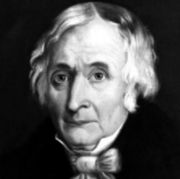
Andrew Vivian was a Cornish mechanical engineer, inventor, and mine captain of the famous Dolcoath mine in Cornwall.
In partnership with his cousin Richard Trevithick, the inventor of "high pressure" steam engines, and the entrepreneur Davis Giddy, Vivian financed the production of the first steam carriage and was granted a joint patent for high pressure engines for stationary and locomotive use in March 1802.
In 1801 Trevithick completed his first full sized road locomotive in Camborne, demonstrating it to the public on Christmas Eve with Vivian at the controls. The first day it ran about the streets and up the very steep Beacon Hill. The next day it went down to the village of Crane so that Vivian's family, who lived there, might see it. In a further trial, one week later, the machine overturned in a rut. It was dragged into a shed while Trevithick and Vivian had lunch at a nearby inn; on their return the boiler had run dry, setting fire to the machine's timber frame.
A second locomotive was tried in Camborne and, at the beginning of 1803, in London. It was shipped to London in the Little Catherine, a temporary packet commanded by John Vivian (1784-1871), nephew of Andrew Vivian. In August 1803, Mr. Felton, of Leather Lane, London, was paid for building the coachwork. William West assembled the machine, under the supervision of Trevithick and Vivian. It ran successfully, although receiving surprisingly little lasting public attention, but again the state of the road surfaces of the time put paid to the enterprise: the carriage was put out of action with a twisted frame. In the face of this setback Vivian withdrew from the partnership. 3
-------------------------
Andrew Vivian of Town died aged 83 years (burial record).
-------------------------
THE LATE CAPTAIN ANDREW VIVIAN.
The following sketch of the above named individual, written by one of his very numerous friends, will be read with interest:—
When such a man as the late much respected and talented individual, Capt. Andrew Vivian, of Camborne, passes from among us "to that country from whose bourn no traveler returns," his death deserves more than a passing notice at our hands. Descended from respectable parents, he received an education fitting him for the situation in life which he was destined to fill; and from his thorough knowledge of mineralogy and mining operations, the neighbourhood in which he lived derived immeasurable benefit. The renewal of the works of the abandoned Dolcoath run of Copper Mines, and North Roskear, which subsequently proved eminently successful, and whereby a dense population have been kept throughout a series of years in constant employment, were the result of his exertions, as were also those of Crenver, Oatfield, Wheal Abraham, Binner Downs, and Wheal Treasury, with similar results. In testimony of his invaluable services, Dolcoath Adventurers, through the late Right Hon. Lord de Dunstanville, in the year 1806, presented him with a handsome piece of plate with a suitable inscription.
Being one of the principal mine agents of Cornwall, he was repeatedly required to give evidence before the House of Commons touching mining affairs ; and as such he mainly contributed to procure the allowance of debenture upon the Norway timber used and consumed in the mines. He was well grounded in the science of mathematics, and as an Engineer ranked with the first of his day. To him, in conjunction with Trevithick, is the world indebted for the construction of that gigantic and wonder-working machine, the locomotive engine,—a distinction of which Cornwall may justly boast. The author of this brief sketch well remembers an evening in the year 1801, when Capt. Vivian first made his experiments on the common roads. Its novelty attracted together a great concourse of people ; the leviathan machine proceeded through the town, treading the streets in the power of her might ; her deep breathings as she ejected the steam at every stroke, and the fire and smoke escaping from her, gave a wild romantic effect to the whole scene, and led a quaint old lady to ask what will they attempt next? at the same time exclaiming, she could compare it to nothing less than a walking devil. For this invention he obtained a patent in February, 1802, and shortly after sold the patent right to Messrs. Boulton and Watt, who also presented him with a superb piece of plate on the occasion.
The extraordinary energies of Capt. Vivian's character, and his faculties and powers of mind, were strikingly demonstrated by the fact that at one period of his life, besides being an extensive banker, which business he conducted with great credit to himself, he carried on a large business as a malster, tallow chandler, and general merchant, superintended the management of eighteen mines, was the confidential agent of several considerable landed proprietors, and withal was no inconsiderable experimental farmer. He was sincerely public-spirited, and ever found ready to join and promote every undertaking in his opinion calculated to conduce to public good ; and posterity will acknowledge to him a debt of gratitude.
Possessed of a great fund of wit and humour, he had the talent of relating anecdotes in a very amusing and agreeable manner, which, united to a remarkably cheerful and frank disposition, rendered him a most desirable companion. In acts of benevolence, "large was his bounty, and his soul sincere." As a kind and indulgent parent he was never surpassed, and the fatherless never failed to find in him a friend and protector. Nor did he ever permit deserving objects of distress to ask relief in vain.
Early in life he became the confidential agent of the families of Trelowarren and Pendarves, and the estimation in which they held him will be best understood by the circumstance that although increasing age and infirmities had for several years incapacitated him for the duties of his office, the present Baronet, Sir Richard Rawlinson Vyvyan, and our present worthy member, Mr. Pendarves, generously continued his salaries to the last.
He was for some years a consistent member of the Wesleyan Methodist society, and died in full assurance of a blessed immortality, on the fifth day of September, 1842, in the 83rd year of his age.
His memory will long be cherished and revered by his family, and a numerous circle of friends and acquaintances.
Penzance Gazette and West Cornwall Advertiser, 21 Sep 1842, p. 3


 Research Notes: