Biography. 2
Early in 1607 two of Backhouse's relatives, Sir Rowland Lytton and Sir William Borlase, were occupied in pacifying the hot-blooded young man who had 'sent a challenge lately to a gentleman of the Temple, for misusing his mother at a show there two years since'. Sindlesham was settled on him at his marriage eight years later, and shortly afterwards his mother-in-law's death brought him a further 'windfall' of £1,500. In December 1618, while in London, he was 'pitifully berayed with the smallpox all over from top to toe'. At about the same time he became involved in his family's defence of certain pews in Swallowfield church, during which he allegedly assaulted John Phippes with a spear. A year later, in more sober mood, he joined his father and other members of the family, including his uncle Borlase, as a shareholder in the New River Company. In 1621 he acted as a juror at the trial for the manslaughter of Archbishop Abbot. He was returned to the first Caroline Parliament for Great Marlow on the Borlase interest, and re-elected in 1626 and 1628. His only committee was in 1626, and concerned a private land bill. In June 1626 he was excused for being absent during a call of the House after he showed that he had been present the next morning.
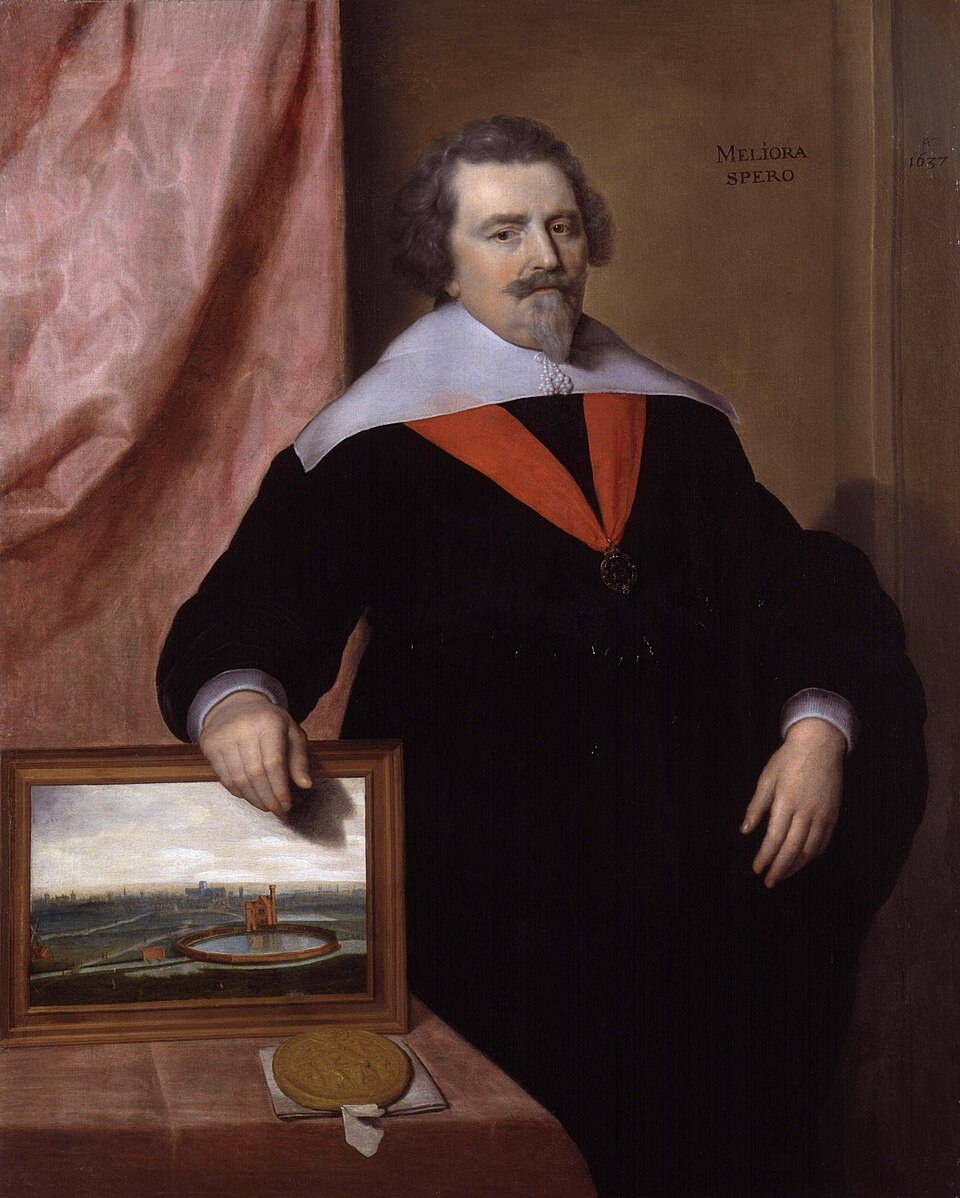
Backhouse was living at Kingsley, in Hampshire, in November 1626, a property that had been acquired by his paternal grandfather and which had been conveyed to his late mother-in-law on his marriage in 1615. However, his principal residence remained in Berkshire. In May 1627 he was listed among those 'to be treated with to give some money to the work' by the feoffees for impropriations, who remembered, perhaps that he was a nephew of the puritan Nicholas Fuller. In January 1629, perhaps while attending Parliament, he became a member of the East India Company. Eight years later he contributed £8 for the repair of St. Paul's Cathedral, 'which he was behind for the years 1635 and 1636'. His interest in the New River Company involved him in a dispute with Sir William Myddelton, who in 1637 claimed that his father had bought, not leased, the site of the New River head from Backhouse's father. A portrait of Backhouse painted at this time shows the disputed property. The quarrel was settled largely in his favour.
On the outbreak of Civil War Backhouse evidently sided with the king, for by October 1643 he was a prisoner in Windsor Castle. The following summer he was assessed at £700 in Blackfriars, where he had been a tenant since 1630 or earlier, of which he paid at least £322 in the country. In May 1645 he complained that his Berkshire property had been sequestrated without it having been proved that he was a delinquent. There were 'tumults' at Swallowfield in 1647 or 1648, and in the spring of 1649 Backhouse was summoned before the Council of State to account for his activity in raising the people of Berkshire. Acknowledging his 'manifold transgressions and exceeding unworthiness of the Almighty's infinite mercies', he died on 9 October. According to his memorial inscription he was 'a man imbued with no slight tincture of every sort of learning, highly skilled in languages, particularly in Greek ... neither injuries, imprisonment, flatterers, nor threats drove him astray ... though childless, truly the father of a family'. Swallowfield and his New River shares passed to his brother William, the Rosicrucian philosopher, whose daughter and heiress married Henry Hyde, later 2nd earl of Clarendon.
--------------------------
In 1626 Sir John Backhouse, Knight, was sole executor of his father's will.
In 1645 Sir John Backhouse was a beneficiary of the will of his sister Mary Standen of Arborfield, widow, who left him £20.
--------------------------
Abstract of the Will of Sir John Backhouse of Swallowfield in the County of Berks, Knight, written 25 Feb 1648/9, proved 5 Nov 1649. 4
Appoints his wife sole executrix, giving her £500, his cattle and household stuff.
Makes his three friends Mr. Josias Bernard, Mr. Samuell West and Mr. William Codrington trustees of his estate.
Gives £10 to the poor of Swallowfield.
Gives £10 to the poor of Kingsley.
Gives £10 to the poor of Wordleham where his land is.
Gives 40 shillings to the poor of the tithing of Synsham.
Gives £5 to the poor of Clerkenwell.
Gives 40 shillings each to the minister officiating at the above places at the time of his decease.
Gives to his servant Thomas Mudd, who will be responsible for collecting and receiving the rents and giving account to his trustees, a lease of a tenement, Thomas paying the testator's wife an annuity of £6 during her life.
Gives £100 to his niece Love.
Gives an annuity of £100 to his brother William Backhouse during his life, besides the manor of Okehanger.
Gives annuities £40 each to John Backhouse and Flower Backhouse, son and daughter of his brother William, until they reach the ages of twenty years and sixteen years respectively.
Directs his trustees to pay £1,000 to the said Flower Backhouse once she comes of age.
Gives an annuity of £100 to his nephew Samuell Bellingham.
Gives an annuity of £100 to his wife's nephew Mr. Samuell West.
Gives leases of land to Andrew Roades and Frances Jennings, for their services to his wife.
Gives £10 to his neighbour and friend Mr. John Harrison.
Gives £5 each to his friends Mr. John Hanman, Mr. Stephen Rose and Mr. Bartholomew Springate.
Gives £50 to his servant Mary Staverton.
Gives £10 each to Lawrence Richards and Richard Justocke.
Gives £5 to Ralph Weekes.
Gives £3 to the boy Tom to secure himself an apprenticeship.
Gives to his servant Anthony Justocke a lease of land during his life.
Gives a yearly sum of £10 over seven years toward the repairing of the road between Swallowfield and Reading.
Makes further bequests to his and his wife's servants.
Witnesses: Thomas Mudd, Edward Swayne, John Castle
Codicil dated 27 Feb 1648/9...
Gives £40 each to his friends and trustees Mr. Josias Bernard and Mr. William Coddrington.
Gives £10 to Mr. Pargiter of Wordleham.
Gives £5 to Mr. Shyler of Swallowfield.
Gives 40 shillings to Mr. John Bouckerson?


 Research Notes: